"Pi does deserve a celebration, but for reasons that are rarely mentioned. In high school, we all learned that pi is about circles. Pi is the ratio of a circle’s circumference (the distance around the circle, represented by the letter C) to its diameter (the distance across the circle at its widest point, represented by the letter d). That ratio, which is about 3.14, also appears in the formula for the area inside the circle, A = πr2, where π is the Greek letter “pi” and r is the circle’s radius (the distance from center to rim). We memorized these and similar formulas for the S.A.T.s and then never again used them, unless we happened to go into a technical field, or until our own kids took geometry."
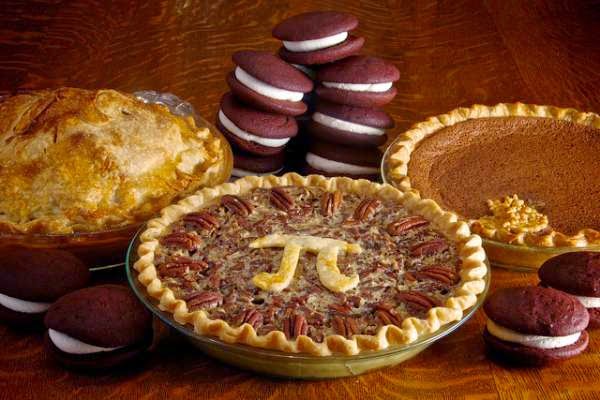
"So it’s fair to ask: Why do mathematicians care so much about pi? Is it some kind of weird circle fixation? Hardly. The beauty of pi, in part, is that it puts infinity within reach. Even young children get this. The digits of pi never end and never show a pattern. They go on forever, seemingly at random—except that they can’t possibly be random, because they embody the order inherent in a perfect circle. This tension between order and randomness is one of the most tantalizing aspects of pi." (read the whole thing)
