Showing posts with label Thomas Jefferson. Show all posts

Tuesday, September 18, 2018

Confirmation


"The Committee will come to order this July 25th the year of our Lord 1789. We are gathered together to establish the Department of Foreign Affairs. Chairman Oliver Ellsworth of the Great State of Connecticut presiding.?
"Thank you Sargent of Arms. Today we are here in our Constitution role of advise and consent to the nomination to the first Secretary of State the Honorable Thomas Jefferson. He is someone who needs no introduction. Statesman, Diplomat, Governor and the author of our beloved Declaration of Independence the Honorable gentleman has been nominated by President Washington to be first among equals. Today we begin the process. Welcome Mr. Jefferson."
"Thank you very much Senator I am pleased to be here. The practices and precedents we establish today will inform our descendants as long as our republic stands. I hope we can be worthy of that heavy responsibility."
"Quite. We will begin our interrogatories with the Honorable Senator from Massachusetts Tristam Dalton."
"Welcome Mr Jefferson. Your exploits and contributions to young nation have long been know and celebrated. A delegate to the Continental Congress. Author of the Declaration of Independence. Ambassador to France. All most estimable achievements. However I must query you as to another achievement. Is it true that you fathered a brace of pickinnies on your slave one Sally Hemmings."

Wednesday, April 13, 2016

"Dear George..."

Tuesday, June 23, 2015

Today I learned...

"Thomas Jefferson cut and pasted from a King James Bible in order to make a condensed version that included the philosophy of Christ the man, with no supernatural events included."
Using a razor, Jefferson cut and pasted his arrangement of selected verses from the King James Version of the books of Matthew, Mark, Luke, and John in chronological order, putting together excerpts from one text to those of another in order to create a single narrative. Thus he begins with Luke 2 and Luke 3, then follows with Mark 1 and Matthew 3. He provides a record of which verses he selected and of the order in which he arranged them in his "Table of the Texts from the Evangelists employed in this Narrative and of the order of their arrangement".

Consistent with his naturalistic outlook and intent, most supernatural events are not included in Jefferson's heavily edited compilation. Paul K. Conkin states that "For the teachings of Jesus he concentrated on his milder admonitions (the Sermon on the Mount) and his most memorable parables. What resulted is a reasonably coherent, but at places oddly truncated, biography. If necessary to exclude the miraculous, Jefferson would cut the text even in mid-verse." Historian Edwin Scott Gaustad explains, "If a moral lesson was embedded in a miracle, the lesson survived in Jeffersonian scripture, but the miracle did not. Even when this took some rather careful cutting with scissors or razor, Jefferson managed to maintain Jesus' role as a great moral teacher, not as a shaman or faith healer."
Reddit Top voted comment...
Just my two cents:

I've read most of the new testament and sometimes jokingly say that I am a secular christian. Most of what Jesus says is pretty standard morality and generally the world would be better if people lived that way, but he wasn't a supernatural being.

Obviously this isn't entirely true, but for the most part following the actual teachings of Christ, the man, aren't going to hurt anyone. I think this is what Jefferson was going for. Casting Jesus Christ as a philosopher like Plato whose teachings have been corrupted by their connection to the old testament and the ravings of fanatic followers.

Thursday, January 15, 2015

Jefferson's Enlightenment

He who receives an idea from me, receives instruction himself without lessening mine; as he who lights his taper at mine, receives light without darkening me.
~Thomas Jefferson link
Toyota made a startling announcement last week, pledging to allow royalty-free access to its patents on hydrogen fuel cell technology. Read the whole thing here.

Wednesday, January 15, 2014

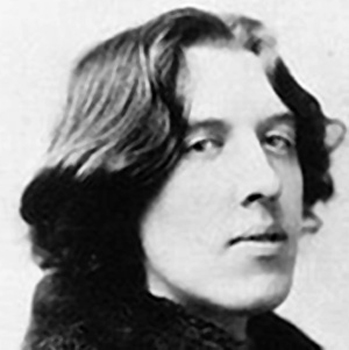
Oscar Wilde On The Future Of Machinery

[This post was inspired by Haz's blog post and discussion in the comments here]


Oscar Wilde wrote in his essay "The Soul of Man under Socialism:"
Up to the present, man has been, to a certain extent, the slave of machinery, and there is something tragic in the fact that as soon as man had invented a machine to do his work he began to starve. This, however, is, of course, the result of our property system and our system of competition. One man owns a machine which does the work of five hundred men. Five hundred men are, in consequence, thrown out of employment, and, having no work to do, become hungry and take to thieving. The one man secures the produce of the machine and keeps it, and has five hundred times as much as he should have, and probably, which is of much more importance, a great deal more than he really wants. Were that machine the property of all, every one would benefit by it. It would be an immense advantage to the community. All unintellectual labour, all monotonous, dull labour, all labour that deals with dreadful things, and involves unpleasant conditions, must be done by machinery. Machinery must work for us in coal mines, and do all sanitary services, and be the stoker of steamers, and clean the streets, and run messages on wet days, and do anything that is tedious or distressing. At present machinery competes against man. Under proper conditions machinery will serve man. There is no doubt at all that this is the future of machinery, and just as trees grow while the country gentleman is asleep, so while Humanity will be amusing itself, or enjoying cultivated leisure – which, and not labour, is the aim of man – or making beautiful things, or reading beautiful things, or simply contemplating the world with admiration and delight, machinery will be doing all the necessary and unpleasant work. The fact is, that civilisation requires slaves. The Greeks were quite right there. Unless there are slaves to do the ugly, horrible, uninteresting work, culture and contemplation become almost impossible. Human slavery is wrong, insecure, and demoralising. On mechanical slavery, on the slavery of the machine, the future of the world depends.
Wilde was writing in 1891, at a time when slavery had been abolished in most of the Western world. Yet there certainly were "wage slaves" then and still are. The American Progressive movement really began to take off around that time (1892).  Make what you will of Wilde's thoughts on slavery -- it's been widely quoted -- I was more interested in his take on machinery ownership.