The commode is carefully molded to gently encourage people to scoot up their legs, so that their posture rests in more of a 45-degree angle, rather than the conventional 90-degree sitting position. To achieve this, the toilet seat is reconfigured to sit atop a raised platform. This design allows people to subtly transition to what was apparently a previous habit proven to be healthier, and it does it in manner that still accommodates what most are used to.

“The biggest challenge was the fact that people don’t even like to talk about the subject,” Pierre Papet says in an email. “The discomfort of talking about as well as doing it the previous way was probably the reason why squatting disappeared as a ‘normal’ posture in the rest of western society.”
While the inventors admit that the wellbeing toilet is very much a concept and “quite far from ending up in retail,” the demonstrated advantages suggest that this idea might not be one to sit on.
In the comments Jonathan says
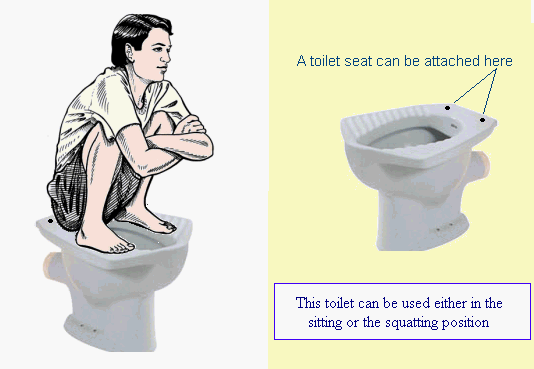
I’m afraid that these designers have made a big mistake. Sitting with your feet propped up is not squatting. The ergonomic squatting position puts the body’s full weight on the feet. All infants automatically assume this posture. Yes, I know that the elderly will never be able to squat, but that’s no reason to force young, flexible people to behave like old, decrepit ones. A toilet has already been designed that allows the elderly to continue sitting (with or without a footstool) and also allows flexible people to really squat. It’s called an “anglo-indian” toilet, and you can see one here: http://naturesplatform.com/images/anglo-indian-pan.gif
Learn why genuine squatting is far superior to just elevating your feet at http://www.naturesplatform.com/faq.html#footstools
Smithsonian online