Plant the tallest plant in the middle and smaller plants around it. What could be easier! The big plant is called the centerpiece.
A centerpiece can be any type of plant as long as it remains taller than the surrounding plants for the life of the arrangement. Choose a plant that is full, or combine several tall, skinny plants together so the centerpiece doesn't look too skinny. Be sure the centerpiece like the same growing conditions (light, temperature, water) as the smaller plants going around it.
Pamela Crawford Easy Container Combos: Vegetables and Flowers pg. 72
Example: Lavender centerpiece, ornamental kale, violas

[The lavender looks like rosemary to me. It will grow much taller, I expect, with purple spikes and this arrangement will look very different then, less balanced than now.]
_____________________
Thomas Hobbs:
Really good gardeners don't hold back. Mesmerizing memorable plant pictures are created by the brave. Spines, teeth, spikes, thorns, and even seed capsules add an edginess to plant compositions. "Safe" gardeners rely on flowers alone and leave theatricality out of it. Gardening is a chance to spread your wings -- why do so many people never fly?
Beware of the botanical quicksand sold as "annuals." This huge industry dispenses humdrum goop like "supertunias" and the insanely popular bacopa (Suteria cordata). This trailing, white-flowered annual is the botanical equivalent of icicle lights -- so overused and trite it has lost any attractiveness through overexposure. The discerning eye learns to avoid most popular plants. Why be like everyone else?
In a mixed planting, never put the tallest plant in the center of the pot. Doing that immediately gives one away as artless. If a pot is to be seen from all sides, plant three tall things, in the middle instead of one, They don't all have to be the same, either. Try combining a young New Zealand flax (a Phormium cultivar of your choice), a bronze Carex Flagellifera and a dark-leaved dahlia such as 'Bednall Beauty' or 'Ellen Houston'. This is much more visually interesting than a green dracaena 'spike' (Cordyline australis), the last refuge of the truly desperate.
Thomas Hobbs, The Jewel Box Garden pg. 71

bacopa (Suteria cordata) ↑

New Zealand flax (a Phormium cultivar of your choice) ↑

bronze Carex Flagellifera ↑

dahlia such as 'Bednall Beauty' ↑

Ellen Houston ↑
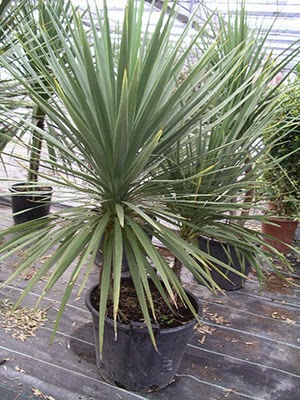
green dracaena 'spike' (Cordyline australis) ↑
the last refuge of the truly desperate.


