Showing posts with label civil forfeiture law. Show all posts

Tuesday, February 9, 2016

Good news from the civil forfeiture front

Forbes: Under Maryland’s draconian “civil forfeiture” laws, people do not have to be convicted, or even charged with a crime, to permanently lose their cash, cars or other valuables. Once their property has been seized, spouses, parents and other innocent owners actually have to go to court and prove that they are innocent of any wrongdoing.

Thankfully, Maryland lawmakers are working to rectify this injustice. Last month, the Maryland General Assembly not only voted to override a veto by Gov. Larry Hogan from last year, but also saw new legislation unveiled that further protects due process rights.

First, SB 528, the subject of the veto override, applies the presumption of innocence to civil forfeiture cases. It requires that the state prove that property owners violated the law or knowingly let their property be used in crimes. Prior to the law, Maryland, along with 34 other states and the federal government, typically placed the burden of proof onto the owner, rather than the government, in civil forfeiture cases.

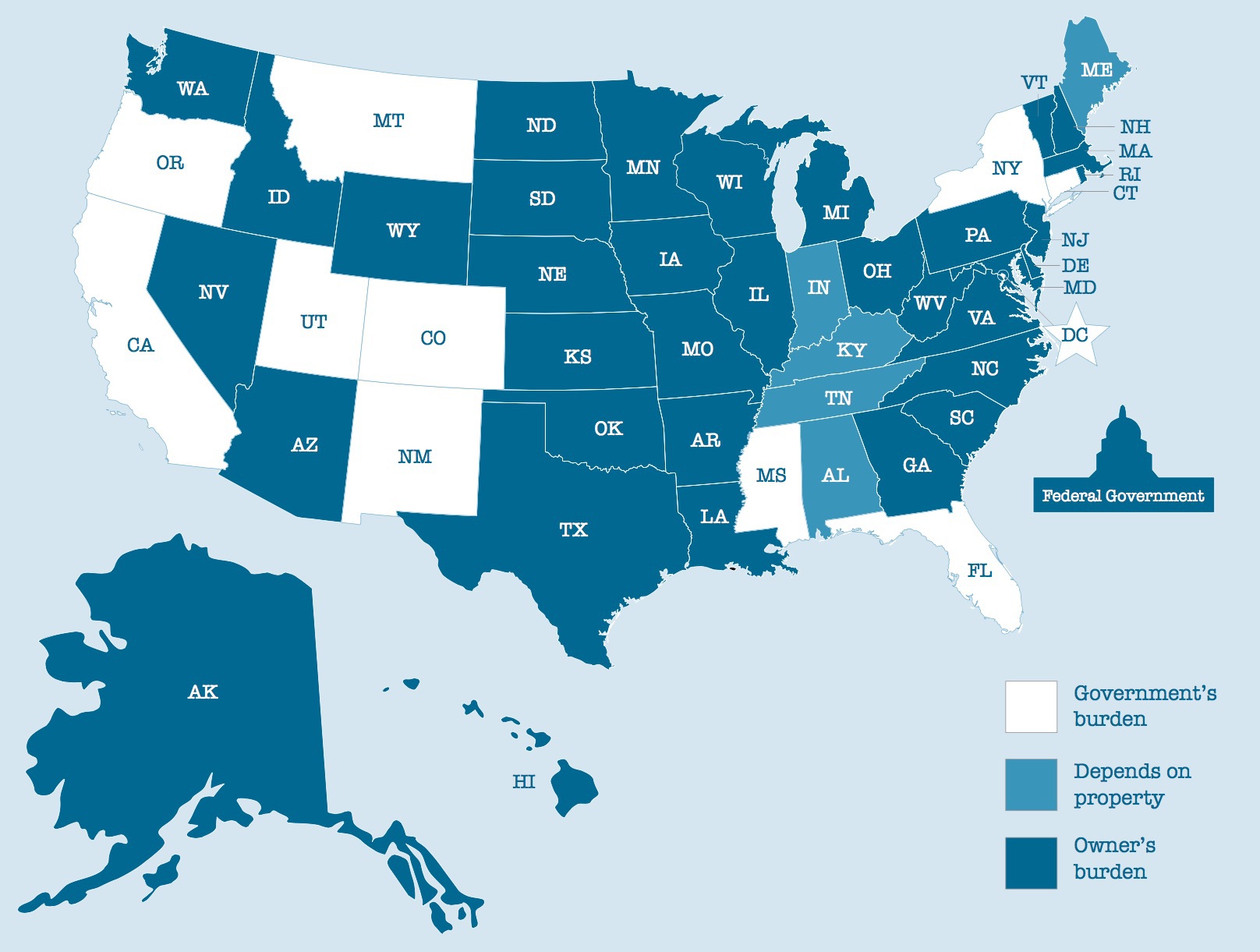
The new law also prevents law enforcement from forfeiting cash under $300, unless they can prove it is related to the drug trade. For those living paycheck to paycheck, and who have broken no law, an unjust seizure by the government can prove devastating. (read the whole thing)

Wednesday, May 13, 2015

"Justice Department's civil asset forfeiture"

"How the DEA took a young man’s life savings without ever charging him with a crime"
Joseph Rivers was hoping to hit it big. According to the Albuquerque Journal, the aspiring businessman from just outside of Detroit had pulled together $16,000 in seed money to fulfill a lifetime dream of starting a music video company. Last month, Rivers took the first step in that voyage, saying goodbye to the family and friends who had supported him at home and boarding an Amtrak train headed for Los Angeles.

He never made it. From the Albuquerque Journal:
A DEA agent boarded the train at the Albuquerque Amtrak station and began asking various passengers, including Rivers, where they were going and why. When Rivers replied that he was headed to LA to make a music video, the agent asked to search his bags. Rivers complied.
The agent found Rivers's cash, still in a bank envelope. He explained why he had it: He was starting a business in California, and he'd had trouble in the past withdrawing large sums of money from out-of-state banks.

The agents found nothing in Rivers's belongings that indicated that he was involved with the drug trade: no drugs, no guns. They didn't arrest him or charge him with a crime. But they took his cash anyway, every last cent...
Joseph Rivers is not the only one... (read more)

Friday, May 2, 2014

“Aren’t we in the United States? We did nothing wrong”

Terry, who came to Michigan from Iraq in 1970, soon did what immigrants often do: He went into business, buying Schott’s Supermarket in Fraser, Mich., where he still works six days a week. The Internal Revenue Service, a tentacle of a government that spent $3.5 trillion in 2013, tried to steal more than $35,000 from Terry and Sandy that year.
Sandy, a mother of four... remembers, “They just walked into the store” and announced that they had emptied the store’s bank account. The IRS agents believed, or pretended to believe, that Terry and Sandy were or conceivably could be — which is sufficient for the IRS — conducting a criminal enterprise when not selling groceries.

What pattern of behavior supposedly aroused the suspicions of a federal government that is ignorant of how small businesses function? Terry and Sandy regularly make deposits of less than $10,000 in the bank across the street. Federal law, aimed primarily at money laundering by drug dealers, requires banks to report cash deposits of more than $10,000. It also makes it illegal to “structure” deposits to evade such reporting.

Because 35 percent of Schott’s Supermarket’s receipts are in cash, Terry and Sandy make frequent trips to the bank to avoid tempting actual criminals by having large sums at the store. Besides, their insurance policy covers no cash loss in excess of $10,000.

In 2010 and 2012, IRS agents visited the store and examined Terry’s and Sandy’s conduct. In 2012, the IRS notified them that it identified “no violations” of banking laws. But on Jan. 22, 2013, Terry and Sandy discovered that the IRS had obtained a secret warrant and emptied the store’s bank account. (read more)
While trying to avoid "actual" criminals this family made themselves a target of another set of criminals, our own government. In an instance when "government is good" and "taxes are good" is proven to NOT necessarily be so, all the time. For the power to tax is also the power to destroy and there is danger from all men. The only maxim of a free government ought to be to trust no man living with power to endanger the public liberty.