Showing posts with label Bitter Living Through Chemistry. Show all posts

Saturday, April 24, 2021

WLEM TV

 Overheard at Lem's: 

Some Seppo said...

We ate Imperial in the 60's. My guess is because it was cheaper than butter, not because of the Sturgeon General's fishy data.

My parents drove over the border to Illinois back then (we lived near Madison) to buy "colored oleo" which was yellow margarine. At the time, it was illegal to sell margarine that looked like butter in Wisconsin. Oleo margarine was especially high in trans fats because of the way it was made: Hydrogenating vegetable oil using a supported heterogenous catalyst essentially guaranteed it. 

Remember all the margarine commercials back then? 


And this was my personal favorite:


I learned my French accent from that guy and also from LeBeau on "Hogan's Heroes."

Friday, April 21, 2017

A Place For Sixty To Reflect

Overheard at Lem's:
Sixty Grit said...
...
III/V, baby - those were the groups we used. Si, indium, aluminum, gallium. those were the ones I had direct experience with.
April 21, 2017 at 7:31 PM

Carbon, silicon, and germanium align vertically in the Periodic Table like a stack of mid-verse rhymes. I say "mid-verse" because they're not at the end of the periodic verses -- the noble gases are. Further below, the rhyme continues with the heavy metals tin and lead, making a vertical pentad of elements.

Carbon, tin, and lead were long-known but silicon eluded discovery until the early 19th-century. This seems astonishing because silicon is the second most abundant element in the earth's crust behind oxygen. The simple combination of silicon and oxygen, SiO2, is the inorganic analog of CO2 and is otherwise known as sand or, when pure, quartz. Elemental silicon was long suspected and early 19th century chemists were convinced that some new element must be present as an oxide in silica -- the problem was finding something to free it from oxygen. Voltaic piles -- which had then recently helped reveal metallic sodium and potassium -- were too weak. Berzellius used a two-step process, first treating quartz with HF to generate SiF4 and then treating the SiF4 with potassium metal. Recently discovered potassium metal was needed. The Germans still call silicon Silizium, giving it the metallic suffix -ium.

Another German (a very bad one) developed a carbo-centric Periodic Table which contains more chemical subtlety than I can master:

Tuesday, April 19, 2016

Embalming Fruit Slices 3

[Continuation from here]


That is the fruit of my labor -- a faux negroni, served shaken cocktail style. I'm quite pleased with the look. I'm going to keep an eye on it though. Even though the fruit slice is hermetically sealed and completely surrounded by plastic resin, there's a chance that anaerobic bacteria or mold could feed on it from the inside. Mold will eat anything cellulose with residual water -- both of which are present inside that embalmed orange slice.

Oh and, just to head off the negroni purists who insist that the drink be served in a highball glass with ice and an orange wedge -- I started making one of those too but ran out of plastic. I'll finish it in due time. I'm even thinking of sending one to spinelli as a peace offering.

Proof that it's fake:

Saturday, November 29, 2014

The Antidote To Loneliness


Ancient Egyptians used stibnite to make blueish black mascara, giving their eyes allure (and the origin of the 72 black-eyed virgins?). You can still see the Latin origin of antimony's name stibium in its modern chemical symbol:


The alchemist's symbol for antimony is:


which sort of resembles an upside down (heels over head?) version of the female symbol.

According to the Wiki, antimony is no longer used in mascara. Instead, carbon black (the same stuff that makes tires black) is used. link

[added]:
Needles of stibnite in calcite

Monday, June 9, 2014

Chemistry You Can Use

So I've been making things out of plastic polymers. This of course generates some waste of polymeric nature - mostly residue on a Pyrex beaker I use for mixing. I tried a bunch of commercially available cleaners but I hit on an old idea for a solution (pun intended): old fashioned lye.

Lye is just concentrated potassium hydroxide (KOH). That's what I used to use in a former life as a lab chemist: got a tough-to-remove goo in you flask?  Just chuck it in a KOH bath. Pure KOH is not easy to come by AFAIK, but my backyard fire pit offers a convenient solution. Just load up a plastic bucket with ash, add some water and voila! Instant KOH bath. It's mild, but just strong enough for what I need.

This must be an old camping or boy scout trick...am I right, Chip?

Tuesday, September 10, 2013

Too Many Chefs And Not Enough Indians


India's patent policies have long irked multinational drug companies. Only in 1995 2005 did India even recognize patents on new drugs. This meant that generic companies could set up shop there and churn out knock-off copies of successful drugs -- drugs which cost millions for someone else to invent -- with impunity. India is not a leader in the discovery of new drugs, however, they are fast becoming a leader in the manufacture of them, along with other BRIC nations. So far so good?

Novartis, India Clash Over Patent Laws

Some express outright hostility towards patent protection in general, arguing that it is essentially rent-seeking. They point out that billions of poor people deserve the fruits of the wealthy, and the human cost is too high to ignore. The problem with that stance (as I see it it) is its lack of a better model for drug discovery; everything being unequal, what is to prevent widespread piracy? Another problem aside from lack of access by the poor is the re-importation of cheaper drugs back into countries which can afford them but which increasingly refuse to pay for them. The problem will become worse before it becomes better.

Friday, September 6, 2013

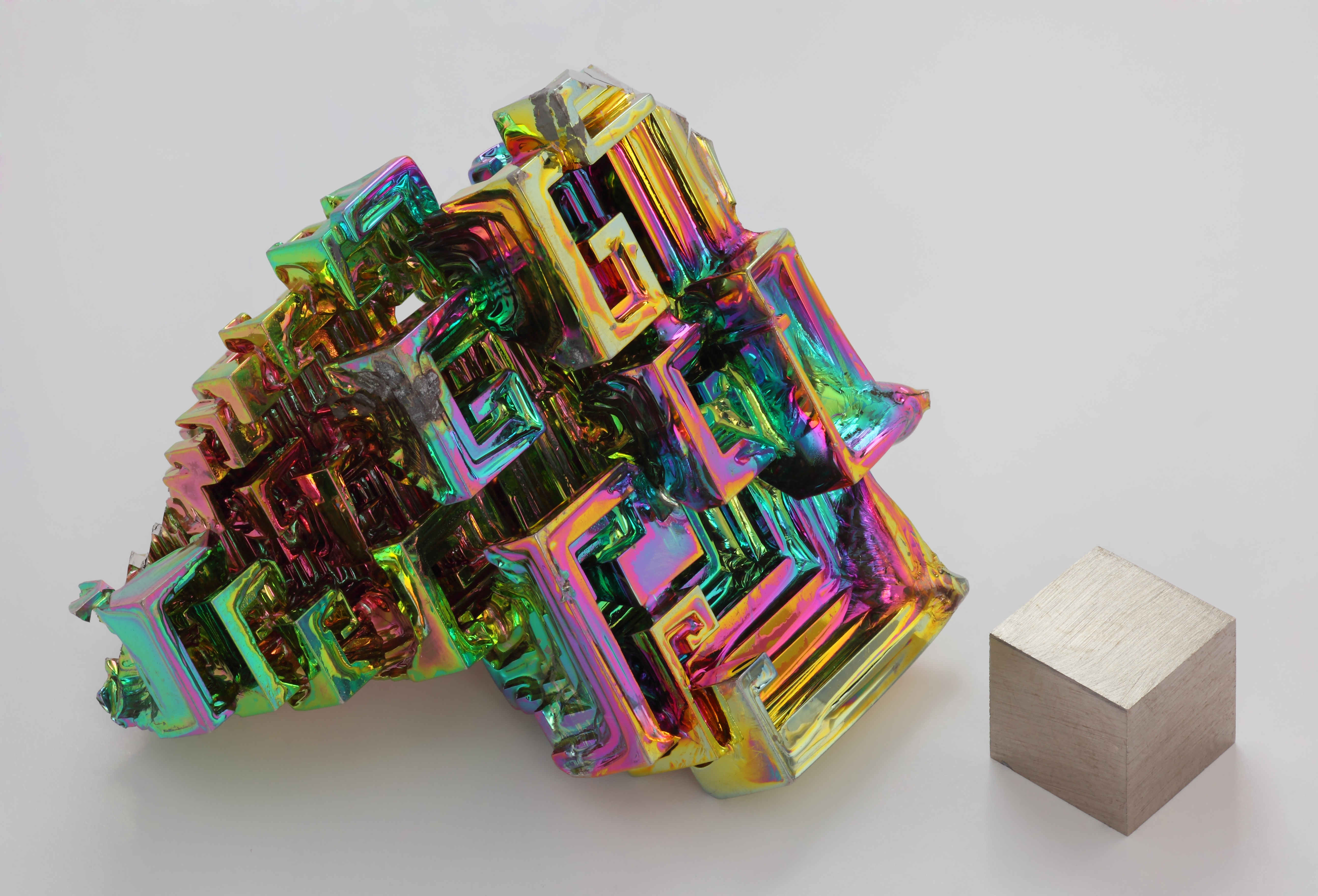
Make Your Own Bismuth Crystals

Yesterday, I linked to this photo of bismuth crystals:

Groovy Bismuth Crystals